How AI-Native Security Data Pipelines Protect Privacy and Reduce Risk

Modern organizations generate more data than ever before. Logs, metrics, traces, and events stream from every application and every physical and virtual layer of infrastructure. Hidden inside this telemetry are pieces of sensitive information that security teams do not expect to see. Social Security numbers, account identifiers, medical details, personal contact information, and other forms of PII can appear in unexpected fields and formats.
Static tools cannot keep pace with this volume or variability. The result is growing compliance risk at a time when regulations are becoming stricter and breach disclosure timelines are shortening.
This blog explains why traditional methods fall short, and how Observo AI uses AI-native detection, enrichment, and data lake capabilities to help organizations find and secure sensitive data everywhere it lives.
The Invisible Risk of Sensitive Data Hidden in Telemetry
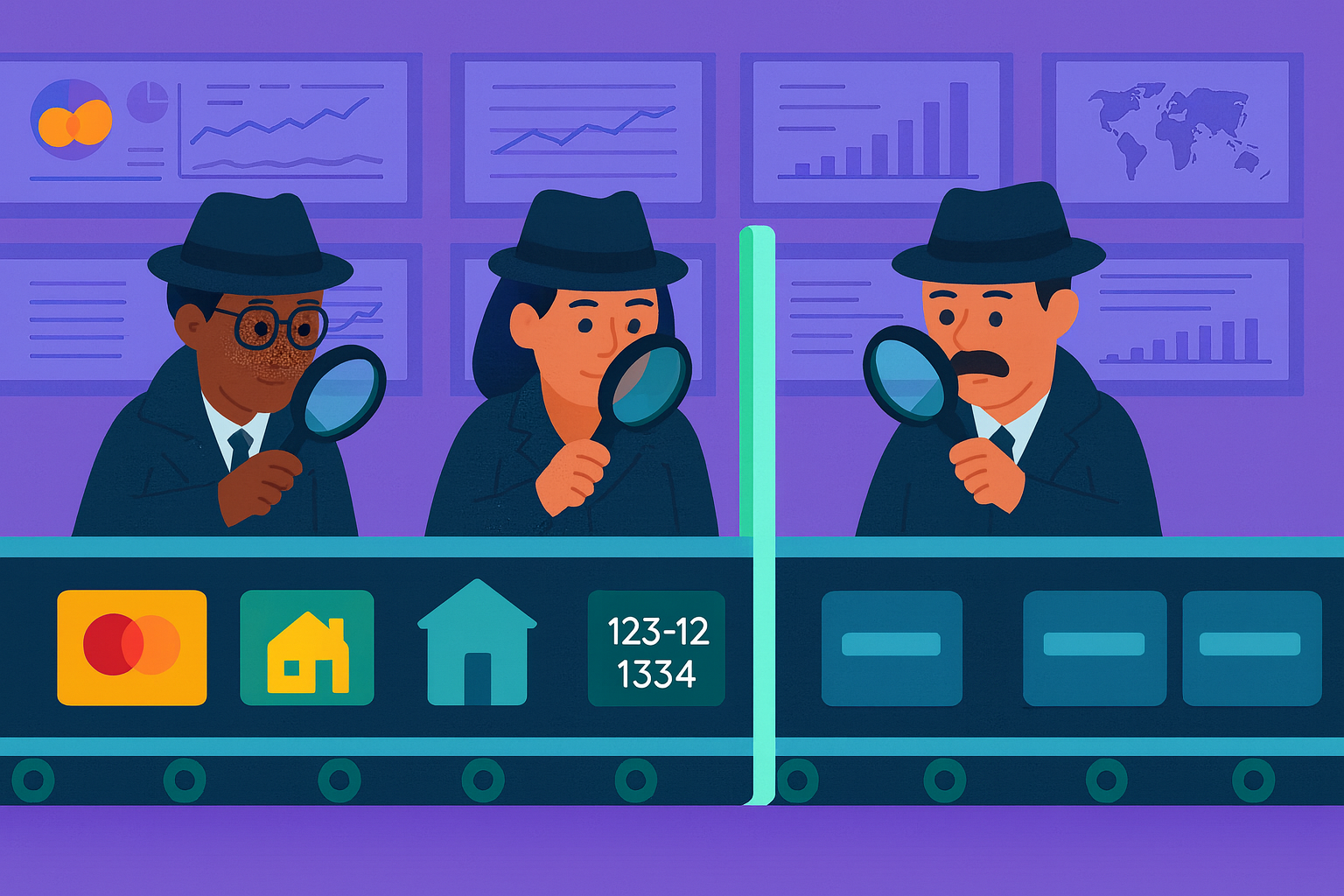
Sensitive data often lives in places no one expects. Everyday development activity, debugging practices, API responses, and application updates can introduce personal information into logs and metrics without warning. A value added temporarily for troubleshooting or an identifier returned from a third-party service can slip into telemetry and remain there unnoticed. As infrastructures scale and systems become more interconnected, these unexpected appearances become more frequent, not less.
This unpredictability creates a serious challenge for data protection teams. Regulations such as GDPR, CCPA, HIPAA, and PCI require consistent control over every instance of personal data. Yet the volume and diversity of modern telemetry make it difficult to know where sensitive information resides or how it changes over time. Once PII enters a SIEM, cloud archive, or analytics platform, removing or correcting it becomes operationally disruptive and expensive.
Manual reviews, regex checks, and hand-written scripts do not scale with real-world data growth. They catch only what teams already know to look for and miss the information that hides in unusual fields or emerging formats. As a result, organizations face an invisible and steadily growing compliance risk: sensitive data leaking into systems that were never designed to store it securely.
Why Field-Dependent Tools Can’t Keep Up
Many compliance and data security tools were built around the assumption that sensitive information appears in predictable places. They focus on specific fields, depend on static schemas, or check only the attributes known to contain PII. This works only when data formats stay stable and when developers follow strict logging conventions. Neither of these is true in modern environments.
Telemetry evolves constantly. Applications add new fields during updates. Third-party services introduce unexpected attributes. Logs shift structure as engineering teams iterate applications. Sensitive data emerges in nested objects, dynamic keys, or custom fields that traditional tools never examine. Even well-intentioned teams cannot maintain comprehensive lists of every field that might contain personal information.
Because these tools look only where they expect sensitive data to be, they inevitably miss what falls outside predefined boundaries. That leaves unmonitored blind spots where PII can flow into downstream platforms unnoticed. Once stored, this data is hard to unwind and expensive to correct, creating both operational burden and regulatory exposure.
Tools tied to fixed schemas and expected fields will always lag behind the reality of dynamic, unstructured, and constantly changing telemetry. This gap is exactly where compliance risk grows and where organizations need a more adaptive, AI-native approach.
How AI-Native Data Pipelines Detect and Secure PII
AI-native data pipelines bring a fundamentally different approach to sensitive data protection. Instead of relying on predefined fields or static schemas, they analyze telemetry dynamically and understand the structure and meaning of data as it flows through the system. This enables them to find sensitive information wherever it appears, even when logs change shape or emit unexpected values.
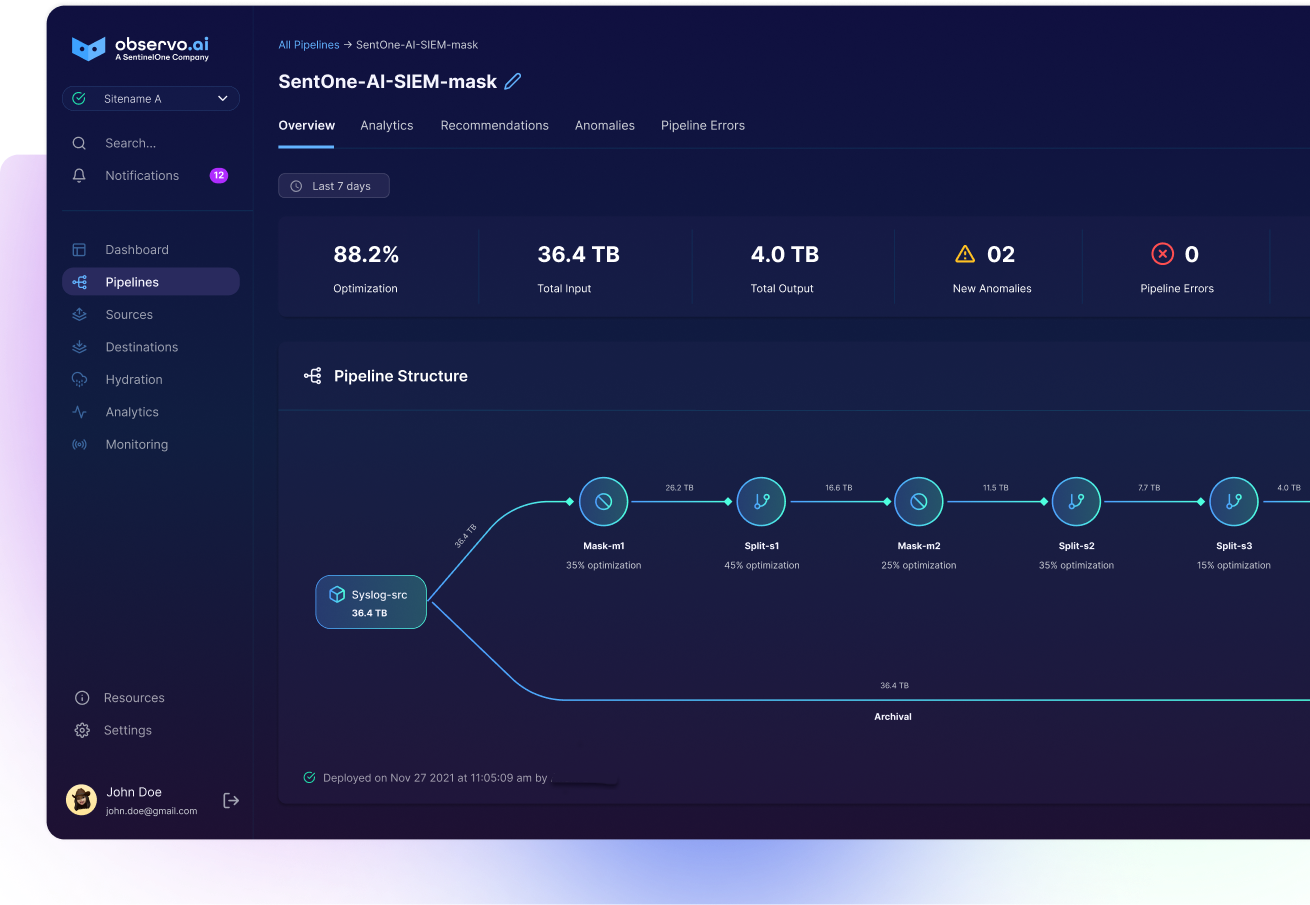
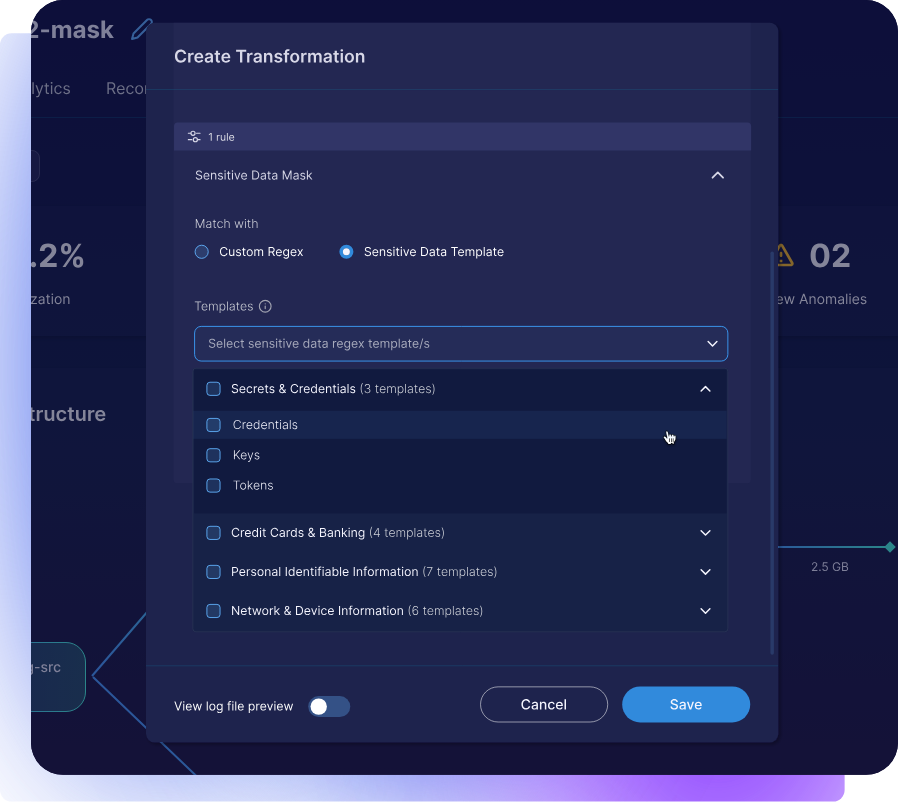
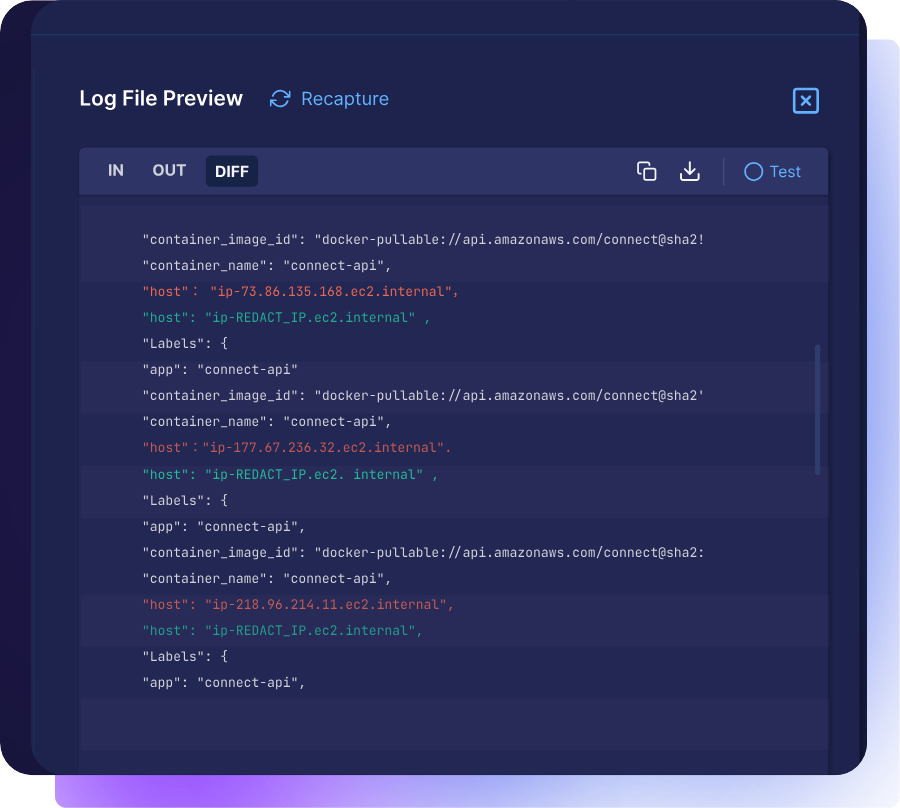
With AI-driven pattern recognition, the pipeline inspects every field, nested object, and attribute in real time. It identifies the presence of PII in any format and applies the correct transformation before that data reaches downstream tools. Sensitive values are masked or hashed according to your specifications, preventing exposure in SIEM platforms, observability systems, data warehouses, or long-term storage and data lakes.
AI-native pipelines also add context to telemetry as it moves. Enrichment such as identity attributes, classifications, or data lineage improves the accuracy of both security detection and compliance reporting. At the same time, built-in data lake capabilities allow organizations to retain full-fidelity telemetry for years at low cost while ensuring that only privacy-safe versions appear in hot storage or analytics environments.
The result is a continuous, intelligent privacy layer that adapts to changing telemetry and reduces the manual burden on security and compliance teams. Sensitive data is identified instantly, protected automatically, and retained in a manner that satisfies today’s regulatory landscape.
What Observo AI Delivers
Organizations that adopt Observo AI see immediate and measurable improvements in how they manage sensitive data across their environments. By identifying and securing PII at the source, Observo AI ensures that compliance is enforced in real time rather than retroactively. Every telemetry stream is scanned with precision, allowing teams to detect sensitive information across one hundred percent of their data sources, including custom applications, legacy systems, and high-volume cloud services that traditional tools struggle to inspect. This comprehensive visibility eliminates blind spots and gives compliance teams confidence that nothing slips through unnoticed.
Automating these processes dramatically reduces manual workload. Instead of relying on ad hoc scripts, field-by-field reviews, or reactive remediation, organizations can cut their compliance-related operational effort by up to seventy percent. Observo AI handles detection, masking, normalization, and PII protection in motion, freeing teams to focus on higher-value work such as investigation, audit preparation, and security strategy. The result is a smoother workflow and a reduced risk of human error across compliance tasks.
Observo AI also simplifies long-term data retention. With AI-driven optimization and Parquet-based data lake storage, organizations can meet multi-year retention mandates without overwhelming their budget or SIEM infrastructure. Full-fidelity logs are preserved in low-cost cloud storage while privacy-safe versions flow into hot analytics layers. This ensures that teams maintain both regulatory compliance and investigative capability without paying premium hot-storage prices.
When incidents occur, Observo AI accelerates investigation dramatically. By maintaining enriched and structured historical data that can be rehydrated into any SIEM on demand, organizations cut breach investigation timelines by fifty percent. Analysts no longer struggle to locate or reconstruct the full history of an event because the data is organized, compliant, and ready to query.
These improvements have helped organizations achieve faster and more consistent compliance with GDPR, CCPA, PCI, HIPAA, and other regulatory requirements. With Observo AI, sensitive information is controlled from the moment it enters the environment, secured throughout its lifecycle, and available for investigation whenever needed. By shifting privacy and compliance from a reactive obligation to a proactive, AI-driven capability, Observo AI strengthens security posture, reduces operational friction, and preserves customer trust.
Real-World Example: Hospital System Secures PII and Simplifies Compliance with Observo AI
A large regional hospital system faced a growing challenge with sensitive data exposure inside its security telemetry. Clinical applications, medical devices, and third-party services often returned fields that included patient identifiers and unexpected forms of PII. These values appeared inconsistently across logs and metrics, making them difficult to detect with traditional tools. At the same time, strict requirements under HIPAA and state privacy laws required the organization to maintain tight control over any data that included patient information. As log volume increased, staying compliant became operationally expensive and nearly impossible to manage manually.
By adopting Observo AI as an AI-native preprocessing layer, the hospital system shifted from reactive, manual reviews to proactive detection and protection of sensitive data. Observo AI scanned every telemetry source, including custom EHR application logs, device data, cloud workloads, and Microsoft security services. They automatically identified PII across all fields and formats. Sensitive values were masked in motion before they reached Azure Sentinel or other downstream analytics tools, preventing exposure and eliminating costly remediation efforts.
This upstream protection changed the hospital’s compliance posture immediately. Manual review scripts were replaced with automated, real-time detection, reducing compliance workloads by more than seventy percent. Full-fidelity data was stored safely in a low-cost, compliant data lake, allowing the organization to meet multi-year retention mandates without inflating SIEM storage costs. When privacy investigations occur, Observo AI can rehydrate only the necessary subset of enriched logs back into Sentinel, cutting breach investigation times by fifty percent.
The improvements extended beyond compliance. With clean, privacy-safe data powering Sentinel, detection quality improved, operational noise decreased, and the hospital’s security team gained higher-confidence visibility across its clinical and IT environments. The health system is now expanding its use of Observo AI to additional facilities and cloud workloads to ensure that PII is consistently protected regardless of where telemetry originates. The experience demonstrates how AI-native data pipelines can reduce risk, strengthen trust, and simplify compliance for organizations that manage sensitive information at scale.
"The amount of sensitive data hidden in our logs was far higher than anyone realized. Observo AI helped us detect it, protect it, and stay compliant without slowing down our security operations."
Director Security Operations Center, Regional Hospital System
Route Data Smartly and Reduce TCO Across Your Stack
Most organizations are handling far more sensitive data than they realize, and traditional tools miss the information that hides in unexpected fields, nested structures, or evolving log formats. This creates avoidable compliance gaps and exposes downstream systems to unnecessary privacy risk. Observo AI gives security and compliance teams an AI-native way to detect sensitive information across every telemetry source, protect it in motion, and retain full-fidelity data safely for years.
Customers are identifying PII across one hundred percent of their data streams, reducing manual compliance work by as much as seventy percent, and meeting long-term retention mandates without overwhelming their SIEM or cloud budgets. They are accelerating privacy investigations by cutting search and retrieval times in half, and strengthening their regulatory posture by ensuring that GDPR, CCPA, HIPAA, and PCI requirements are enforced continuously rather than reactively.
Find out for yourself. Request a demo with our engineers to learn how AI-native data pipelines can help your organization find, secure, and manage sensitive data with confidence.